Contact Us
A person working at a computer while another watches, and a third points out specific points, illustrating collaboration and communication.

What is SuiteCommerce?

NetSuite Ecommerce Built to Work With Your ERP

SuiteCommerce is NetSuite's ecommerce platform for businesses that want their online store and back-office operations working together. Built directly on NetSuite ERP, SuiteCommerce connects ecommerce with the customer, order, inventory, and financial data already in NetSuite without relying on a separate ecommerce-to-ERP integration.

What Is NetSuite SuiteCommerce?

SuiteCommerce is a NetSuite ecommerce platform built directly into the broader NetSuite ecosystem. Instead of running ecommerce on a separate platform and maintaining an integration back to your ERP, SuiteCommerce connects your storefront with order management, inventory management, CRM, customer data, and other business information already managed in NetSuite.

That native connection is particularly useful when the ecommerce experience depends on what's happening elsewhere in the business. Inventory availability, customer information, orders, pricing, and other ERP data can be used across the storefront and back-office processes without maintaining the same information across disconnected systems.

Whether you're launching a new ecommerce store or migrating from another platform, SuiteCommerce can support both B2B and B2C ecommerce, with options for themes, extensions, customer accounts, and other customization as your requirements evolve. For businesses that need even greater control over the underlying ecommerce architecture, SuiteCommerce Advanced (SCA) provides access to the source code.

What Is the Difference Between SuiteCommerce and SuiteCommerce Advanced?

SuiteCommerce and SuiteCommerce Advanced (SCA) are both NetSuite ecommerce options, but the level of development access is different. SuiteCommerce—formerly referred to as SuiteCommerce Standard (SC)—still supports meaningful customization through themes and extensions, so choosing Standard doesn't mean you're limited to an out-of-the-box storefront.

The primary difference is source-code access. SuiteCommerce Advanced gives developers access to the source code, making it the better fit when ecommerce requirements involve heavier customization or changes to the underlying architecture. SuiteCommerce can handle many common customization requirements without that additional level of access.

Cost is another consideration. SuiteCommerce Advanced is generally the more expensive option, so the question isn't simply which product offers more flexibility—it's whether your requirements actually justify the additional development access and cost.

SuiteCommerce Key Features

SuiteCommerce brings ecommerce and NetSuite ERP together on the same platform, giving businesses access to real-time operational data while providing flexibility to customize and scale the storefront as requirements change. Here are some of the key SuiteCommerce features that make that possible.

Native NetSuite ERP Data

Because SuiteCommerce is built directly on NetSuite, your storefront can work with real-time ERP data for customers, inventory, orders, pricing, and other business information without relying on a separate integration to keep systems in sync. As your product catalog and inventory grow, that information can continue to flow directly from NetSuite to the ecommerce storefront.

browser window with stats and graphs icon

Flexible Themes & Extensions

SuiteCommerce themes and extensions give you flexibility to customize the design and functionality of your ecommerce site. Businesses with more advanced requirements can extend the storefront with JavaScript, HTML, and other development around their customer experience and operational needs.

adjustments icon

NetSuite Scripts & Customization

SuiteCommerce works with the broader NetSuite environment, including NetSuite scripts and custom functionality. That gives businesses more room to build ecommerce experiences around processes and requirements that aren't handled by an out-of-the-box storefront.

computer with code icon

B2B Customer Accounts

SuiteCommerce can connect ecommerce customers directly with NetSuite and provide customer login and account functionality for B2B businesses. Customer-facing experiences can be customized around ordering, account information, pricing, and other self-service requirements.

b2b icon

Fast, Responsive Shopping Experience

SuiteCommerce uses a single-page application architecture designed to reduce unnecessary page reloads as customers move through the storefront, helping create a smoother ecommerce experience across devices.

Webpage icon.

Ecommerce SEO Management

SuiteCommerce gives teams control over important ecommerce SEO elements such as page titles, descriptions, product information, and other site content. Additional development and customization can be used when the storefront has more advanced technical SEO requirements.

seo tag icon

SuiteCommerce MyAccount

SuiteCommerce MyAccount is a B2B customer self-service portal for NetSuite businesses that need customer account functionality without implementing a complete SuiteCommerce ecommerce storefront. MyAccount provides a more focused entry point into NetSuite ecommerce for businesses whose customers primarily need access to account information and self-service tools. It also provides an alternative to the NetSuite Premium Customer Center traditionally used as a customer portal.

MyAccount can be customized through themes and extensions to support requirements such as order forms, contact information, custom records, marketing content, and other account-specific functionality. SuiteCommerce MyAccount Standard and Premium provide different licensing and functionality options, so MyAccount pricing depends in part on which version and capabilities your business needs.

For businesses in software, high-tech, wholesale, distribution, manufacturing, and other B2B environments, MyAccount can provide customers with a more useful way to interact with information and processes already managed in NetSuite.

person looking at the suitecommerce myaccount ui

Proven Success

oracle netsuite alliance partner spotlight winner 2022 retailoracle netsuite alliance partner spotlight winner 2022 suitecommercelogo competitive spotlight winner epicor switch blacklogo product spotlight award suitecommerce

SuiteCommerce Implementation and Web Store Migration Services

A SuiteCommerce implementation can look very different from one business to another. Scope depends on which SuiteCommerce product you're implementing, the design and functionality your storefront requires, and whether the project includes custom development, integrations, third-party solutions, or migration from an existing ecommerce platform.

A relatively straightforward SuiteCommerce implementation may focus on configuration, theme setup, and getting the storefront ready for launch. More complex projects can involve custom themes and extensions, B2B functionality, integrations, checkout requirements, custom records or scripts, and migrating an existing web store without disrupting the processes already running through NetSuite.

How Long Does a SuiteCommerce Implementation Take?

The hours required depend on the requirements of the project, but these ranges can provide a starting point for planning:

  • SuiteCommerce: 80–200 hours
  • SuiteCommerce Advanced: 150–500 hours
  • SuiteCommerce MyAccount: 10–80 hours

These are general ranges, not fixed project estimates. Design requirements, custom functionality, integrations, data or content migration, and the complexity of your existing ecommerce operation can all affect the final implementation scope.

About SuiteCommerce Implementation >

What Does SuiteCommerce Implementation Cost?

Implementation cost follows scope. A business launching a relatively standard SuiteCommerce storefront will have a different project from one migrating a highly customized ecommerce site with complex B2B requirements, integrations, extensions, and custom development. Rather than estimating from the SuiteCommerce product alone, we look at what needs to be designed, configured, developed, integrated, migrated, and tested to get the storefront working the way your business needs it to.

Who Is SuiteCommerce a Good Fit For?

SuiteCommerce makes the most sense when your ecommerce operation needs to work closely with NetSuite. Because the platform is built directly on NetSuite ERP, it can be especially useful for businesses that want their storefront, customer experience, and back-office processes working from the same underlying system.

SuiteCommerce may be a good fit if your business:

  • black square outline with orange checkmark

    Already uses or plans to implement NetSuite ERP

    SuiteCommerce is built for NetSuite, so it's particularly compelling when NetSuite is already at the center of your business.

  • black square outline with orange checkmark

    Wants ecommerce and ERP data in one platform

    Orders, customers, inventory, pricing, and other ecommerce data can work directly with the information you're managing in NetSuite.

  • black square outline with orange checkmark

    Has complex B2B ecommerce requirements

    Customer-specific experiences, account functionality, custom records, ordering workflows, and other B2B requirements can be built around the way your customers actually buy.

  • black square outline with orange checkmark

    Needs real-time inventory and order visibility

    Because SuiteCommerce works directly with NetSuite, your ecommerce experience can use the inventory, order, customer, and operational data already in your ERP.

  • black square outline with orange checkmark

    Wants room to customize the ecommerce experience

    Themes, extensions, SuiteScript, and other development options give businesses flexibility to tailor SuiteCommerce around requirements that go beyond an out-of-the-box storefront.

  • black square outline with orange checkmark

    Wants to reduce reliance on a separate ecommerce-to-ERP integration

    Instead of maintaining a third-party ecommerce platform and the integration connecting it to NetSuite, SuiteCommerce keeps ecommerce within the NetSuite ecosystem.

A man at a desk using a laptop, with a notepad and a cup of coffee nearby.

SuiteCommerce isn't automatically the right choice just because you use NetSuite.

If your ecommerce requirements are better served by a separate platform, that architecture may make more sense. Anchor Group works across SuiteCommerce, BigCommerce, and Shopify, so we can help you evaluate the tradeoffs rather than forcing every ecommerce project into the same platform.

Not sure which direction makes the most sense? Answer five questions in our Ecommerce Platform Picker to see which platform may be the best fit for the way your business actually sells.

netsuite consultant Working on Computer

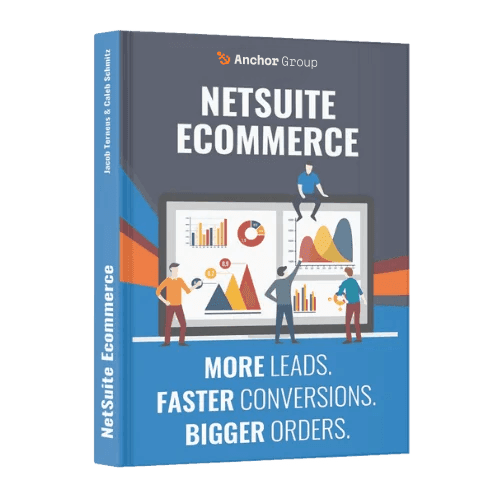
We'd like to gift you a FREE* NetSuite Ecommerce book!

*We even pay for shipping. So, seriously, no hassle. Just A LOT of free! Here at Anchor Group, we pride ourselves on having the heart of a teacher... this is just one of the many ways that we follow through on that value.

NetSuite Ecommerce book with white background.

Blog Articles

Learn More About SuiteCommerce

What Is SuiteCommerce MyAccount? (And Who Needs It?)

In this episode, Anchor Group’s Peter Gagliardi breaks down SuiteCommerce MyAccount—NetSuite’s built-in B2B customer portal. We explore what it is, how it compares to the full SuiteCommerce platform, and when it makes sense to implement MyAccount as a standalone solution. Peter also shares common customizations, real-world use cases, and how MyAccount can reduce sales team workload by empowering customers to manage orders, invoices, and communication independently.

Read the Article Two people discussing a document held open between them.

Lindemann | SuiteCommerce Success Story

Lindemann is an authentic, down-to-earth, American company that has become a true force to be reckoned with in the chimney supplies market. Although doubtless most of that success is due to their own hard work and innovation, they also attribute much to the benefits offered by SuiteCommerce.

Read the Article Two men shaking hands with the Lindeman Chimney Company logo in the background, symbolizing partnership and collaboration.

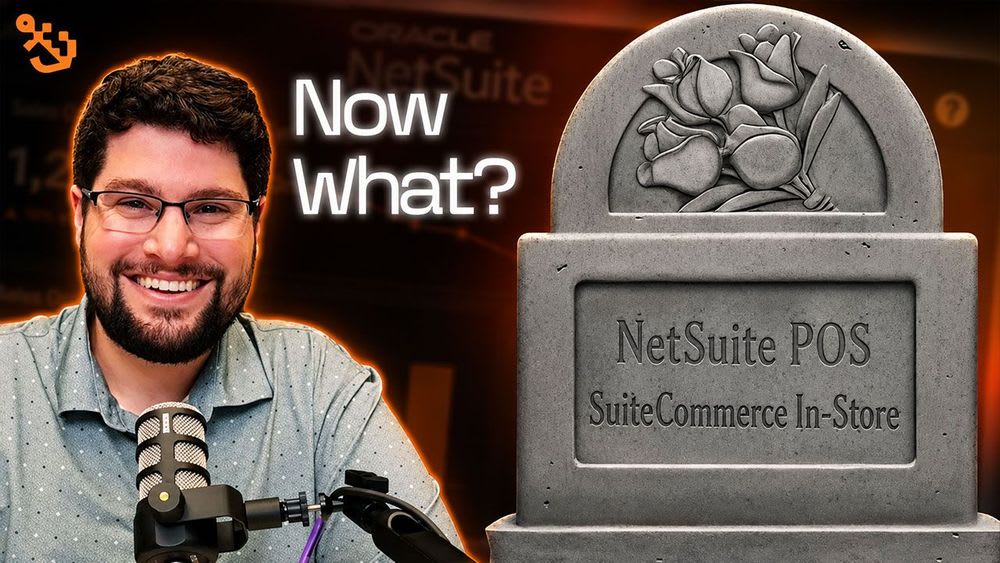
NetSuite POS & SuiteCommerce In-Store Are Being Retired

NetSuite is retiring NetSuite POS and SuiteCommerce In-Store (SCIS). In this video, Caleb from Anchor Group explains what's being discontinued, what's staying, and how to choose a replacement point of sale that still integrates cleanly with NetSuite. He compares two NetSuite-ready options, In8Sync and VennPOS, and shows which type of business each one fits.

Read the Article netsuite pos and scis end of life, what to do

SuiteCommerce FAQs

Ready to Talk About SuiteCommerce?

Whether you're considering SuiteCommerce for the first time, migrating an existing ecommerce store, or trying to get more out of a SuiteCommerce site you already have, the right approach depends on what your business actually needs. Our SuiteCommerce consultants and developers can help you sort through the platform options, implementation requirements, integrations, customization, and other decisions that come with building ecommerce on NetSuite.